TTP Global

A restorative approach to building relationships, repairing harm, and sustaining community.

Enter the ecosystem.
This work lives in relationships.

The Restorative Ecological Model™ (REM)
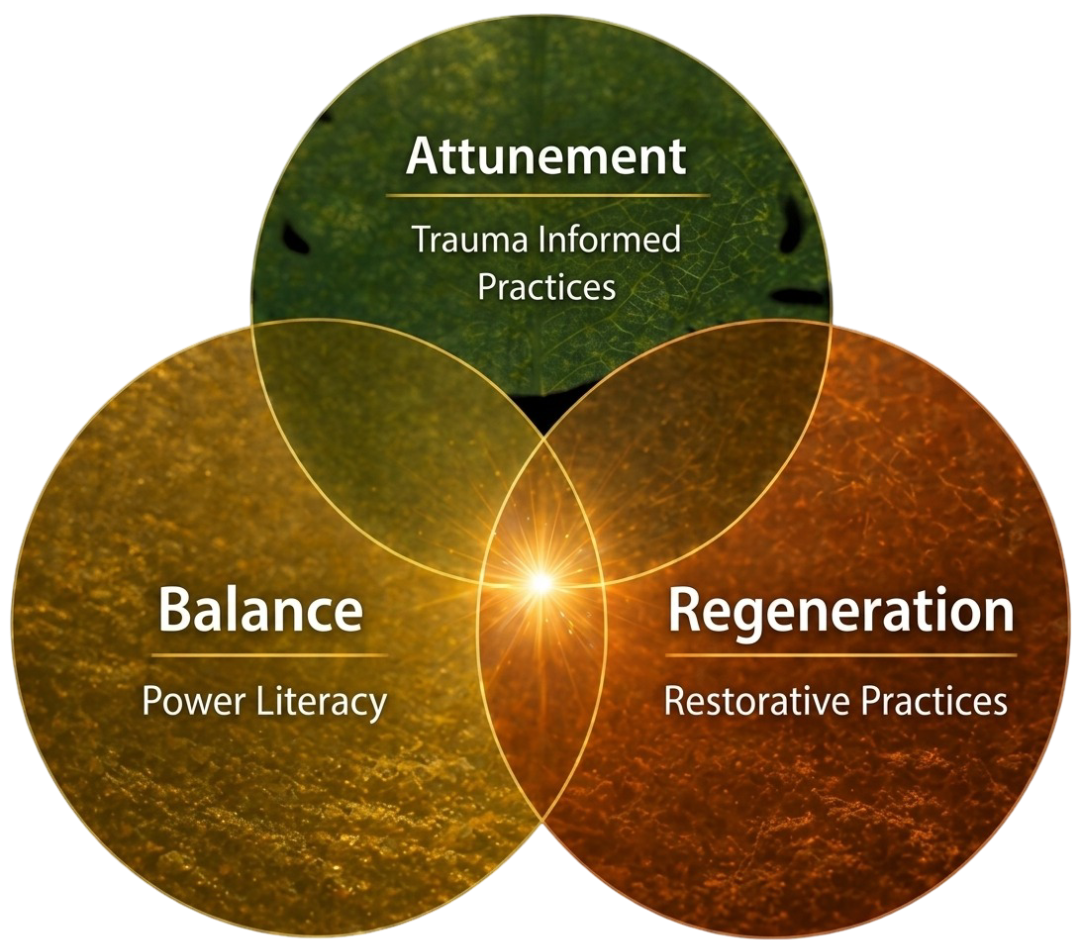
A framework we developed to understand communities as living system - interconnected, layered, and capable of regeneration.

REM Diagram
Interconnected
Layered
Regenerative

Where we come from matters.
Lineage, history, and relationship shape the work.

What sustains the work lives beneath the surface.

Rooted locally. Connected globally.

TTP Global brings together decades of practice, scholarship, research, and learning across schools, organizations, and communities — from California to Aotearoa, East Africa, Japan, Cameroon, and beyond.

Together, these influences have shaped TTP Global’s theoretical framework, the Restorative Ecological Model™ (REM) — an approach to strengthening relationships, repairing harm, and creating the conditions for communities to thrive.

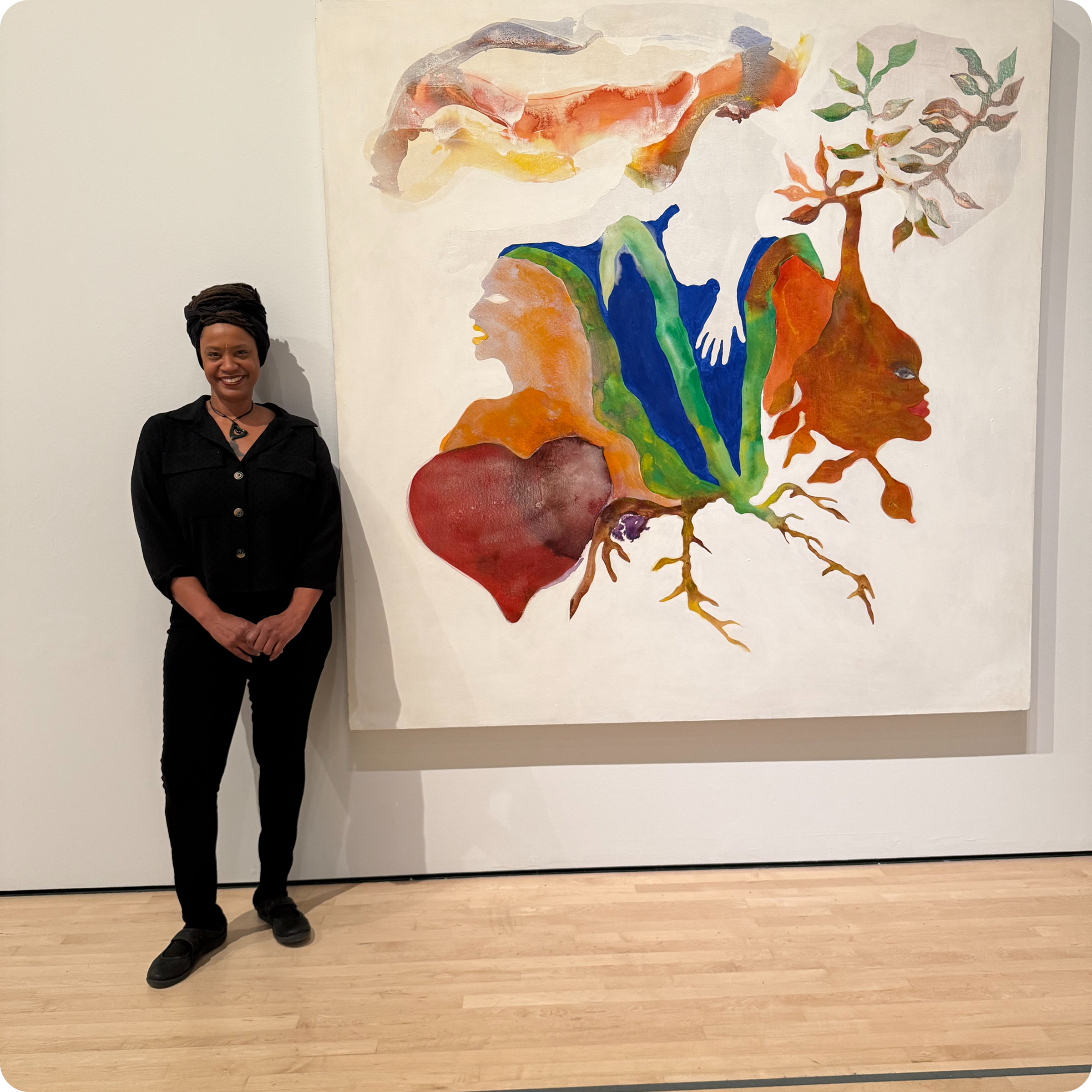
Dr. Sherry Congrave Wilson with work by Suzanne Jackson at SFMOMA, 2026.

We partner with schools, organizations, and communities to build the conditions for repair, accountability, and lasting relationships.

Restorative Justice Training

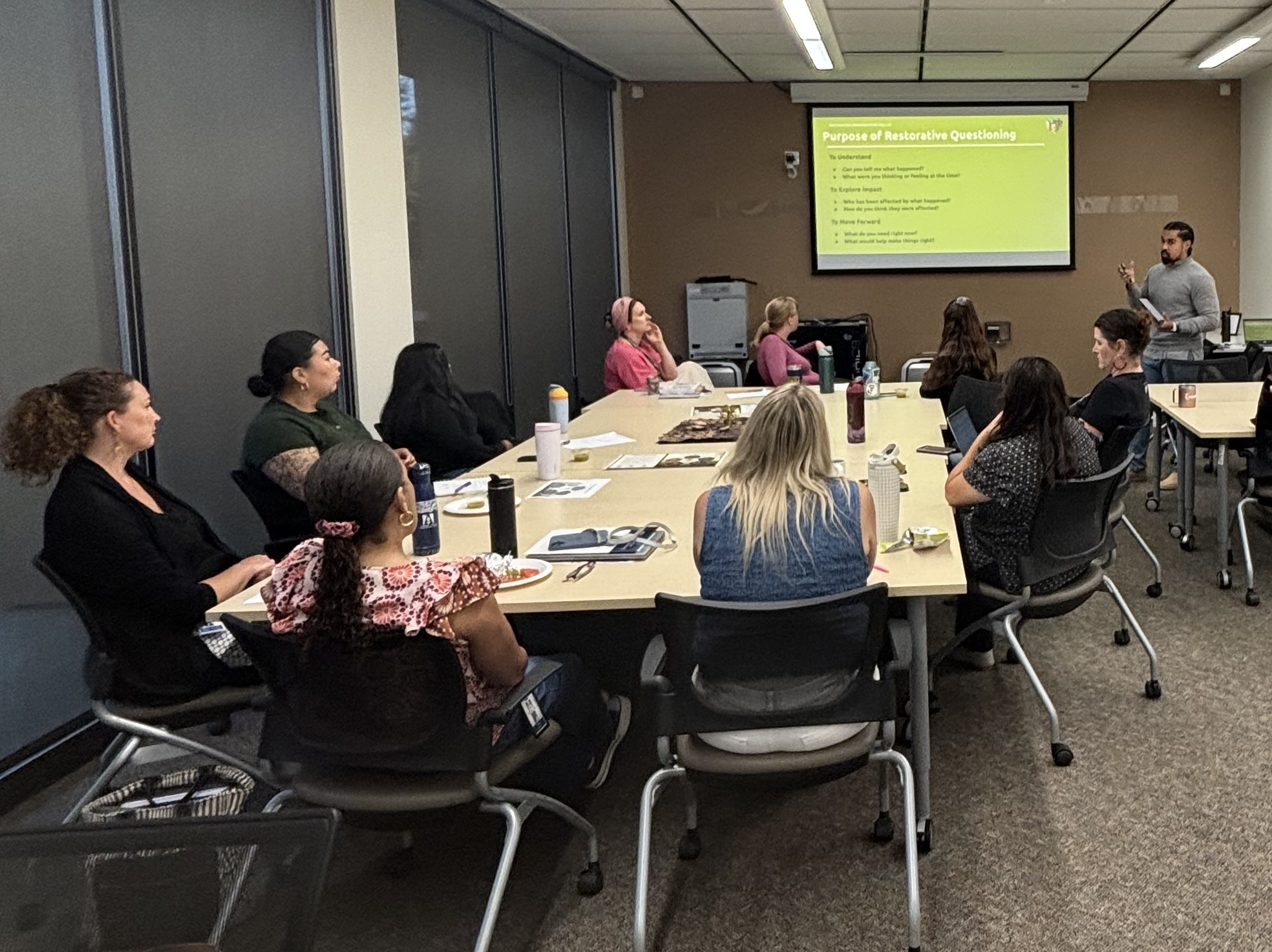
We provide training for educators, leaders, and community members to build the skills needed to facilitate restorative practices with confidence and care.

Restorative Conflict Mediation

We support individuals and groups in navigating harm, conflict, and relationship breakdown through structured restorative processes that create space for accountability, repair, and meaningful reintegration.

Youth Mentorship & Creative Practice

We work alongside young people through restorative practice, creative expression, and relational mentorship that centers voice, agency, connection, and possibility.

Equity-Informed Facilitation

We design and facilitate spaces that center equity, cultural awareness, and relational accountability, supporting groups as they navigate complexity, difference, and change.

Trauma-Informed Somatic Practice

We integrate body-based practices that support regulation, awareness, and sustainable engagement in restorative work.

Ways to work with us

Introductory Engagements

Workshops, trainings, and short-term facilitation to build foundational skills.

Ongoing Partnerships

Multi-session engagements that support implementation, coaching, and integration over time.

Deep Collaboration

Longer-term partnerships that embed restorative practices into the culture of a school or organization.

Ways to work with us

Introductory Engagements

Workshops, trainings, and short-term facilitation to build foundational skills.

Ongoing Partnerships

Multi-session engagements that support implementation, coaching, and integration over time.

Deep Collaboration

Longer-term partnerships that embed restorative practices into the culture of a school or organization.

What’s Happening Now

Building Restorative Leadership From the Inside Out

TTP Global is launching a new Restorative Leadership Institute, led by Senior Practitioner Ramsay Boly, to help educational leaders build the relationships, practices, and shared capacity needed to move restorative leadership from individual strategies into organizational culture.

TTP Global Goes International: A New Chapter Begins

TTP Global is entering a new chapter—expanding our work across the United States while establishing a base for learning, relationship-building, and future possibilities in Southeast Asia, including the development of restorative retreats at home and abroad.

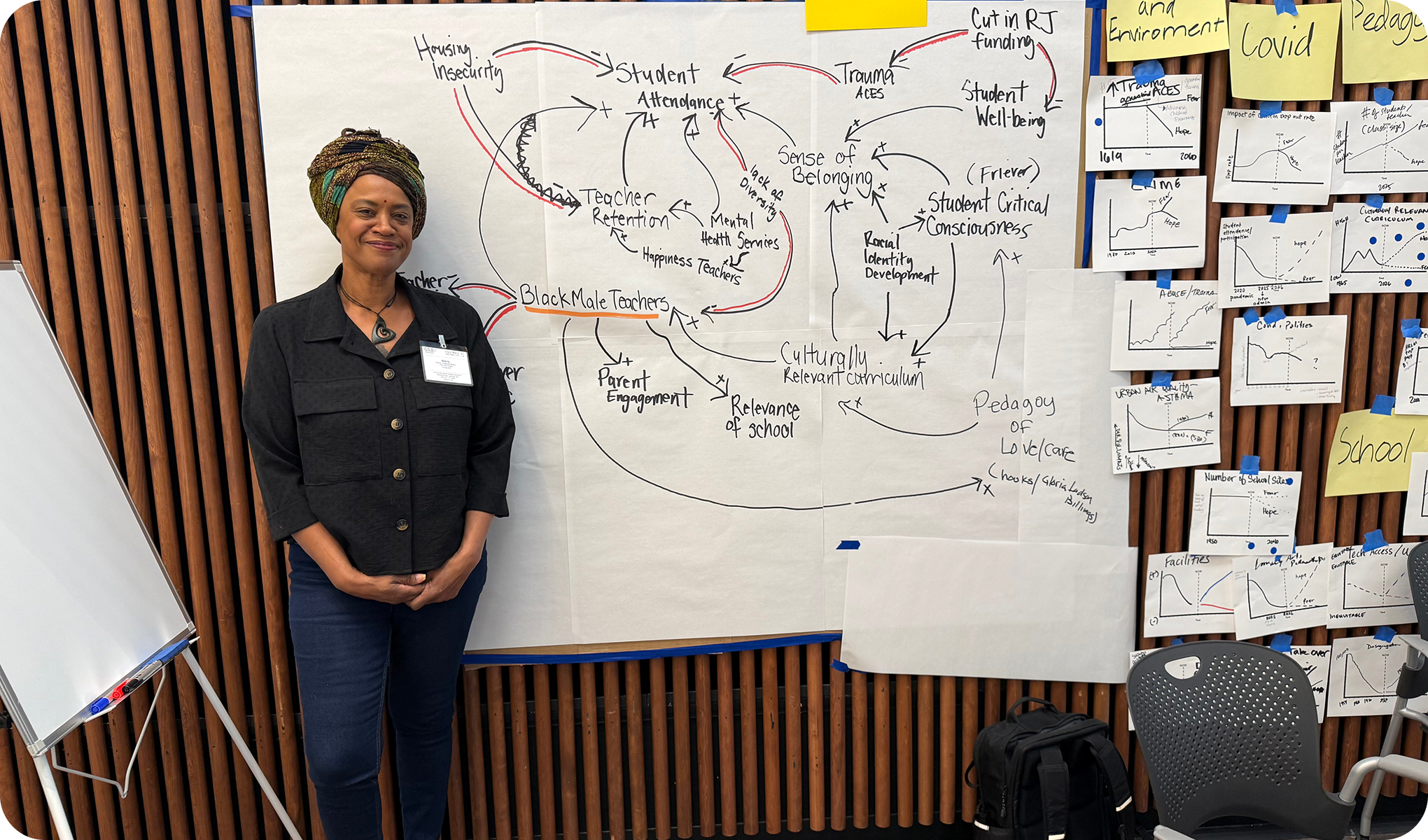
Deepening Our Systems Practice: Community-Based System Dynamics

TTP Global is deepening its systems practice through Community-Based System Dynamics, connecting systems thinking and modeling with the evolving Restorative Ecological Model™.

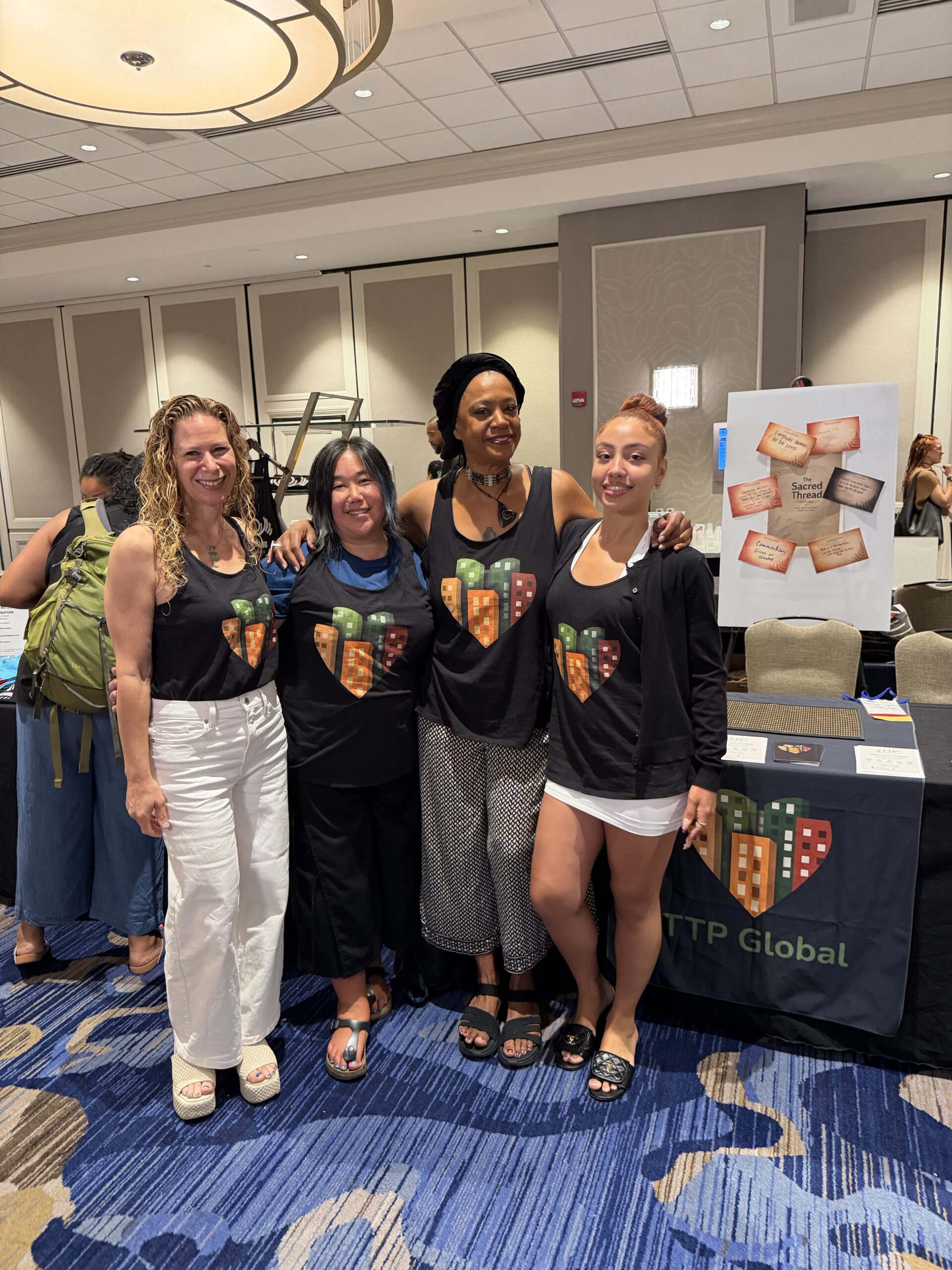
National Association of Community and Restorative Justice (NACRJ) — July 2026

This summer TTP Global presented three sessions at the 10th National Conference on Community and Restorative Justice in New Orleans.

Stay Connected

This work is always in motion — and so are we.
From school communities in California to circles in Aotearoa, from Oakland to Vietnam — we document the work as we live it, in real time and in relationship. Field notes, reflections, program updates, and quiet moments from the global restorative justice movement.

Read the latest dispatches

Read the latest dispatches

Subscribe to receive a short monthly note — a quiet thread connecting you to what we are practicing, learning, and building as it unfolds.

You don’t have to do this work alone.

From the Field

Reflections, dispatches, and stories from the work
— as it’s lived, not just remembered.

Restorative justice has become another household educational term. Another acronym. RJ. Another thing that can be packaged neatly, pulled out when it is convenient, and pointed to as evidence that a school is “doing restorative justice.”

And often, the biggest symbolic act of doing RJ is the circle.

I find this particularly interesting because when I traveled to Aotearoa New Zealand to study restorative practices, circles were not nearly as central to the work as they often are here in the United States. Schools certainly used circle practices, but what struck me was that they didn’t seem to need to constantly demonstrate that they were being restorative. The values were much more deeply embedded in what they did.

That distinction matters.

We can have restorative processes operating inside deeply unhealthy school cultures. I remember talking with one of our practitioners whose child attended a local school with a reputation for being a “restorative justice school.” Yet her experience was that restorative practices were primarily used when harm had already occurred.

That is Tier 2 restorative practice.

And this is what I mean when I say: you can’t circle your way out of a broken culture.

When Tier 2 takes precedence and Tier 1 is not actively and intentionally practiced, we haven’t created the conditions restorative justice requires in the first place.

Tier 1 is where we build safe containers every day. It is where we build strong relationships and community. It is where we practice perspective-taking for the sake of understanding another person—not simply because there is a conflict that needs to be resolved.

In fact, I would argue that Tier 1 may be even more important than Tier 2. And yet restorative justice is still primarily known for what happens after harm: conflict, accountability and repair.

But restorative justice is the whole package.

A Circle Is Only as Restorative as the Culture Around It

You can put students in a circle and still yell at them.

You can put students in a circle and have the adult remain at the center of everything.

You can hold circles so routinely that they become just another activity students are expected to participate in rather than something vibrant and meaningful.

To me, some of the best circles happen when students begin to take ownership—when they are leading and guiding the process themselves. And I think we have to be more intentional and creative about how we use circles. Maybe that means circles between students who don’t normally interact. Maybe it means intergenerational circles or circles across classes. Maybe it simply means remembering that the purpose is not to perform restorative practice. The purpose is to build community and relationship.

Sometimes I wonder whether we need a basic litmus test for what it means to call yourself an RJ school. I don’t mean that in a militant way. But as a practitioner, it is frustrating to watch restorative practices implemented halfway and then hear people conclude that restorative justice doesn’t work.

Of course it doesn’t work when we reduce it to a technique.

You Can Feel Culture

There is a feeling to a school.

When a culture is unhealthy, you can often feel the tension. People don’t seem particularly happy to be there. Teachers look exhausted and burned out. The environment doesn’t feel welcoming. There can be beautiful values painted on walls while very different values are communicated through everyday interactions.

I felt something different in many of the schools I visited in Aotearoa New Zealand.

I remember walking through Selwyn College, a large school that seemed packed with young people. There were so many teenagers moving through the space that I expected to feel the tension I often associate with adolescents crowded together in a building.

Instead, I felt a flow. There was a togetherness and a sense of unity that felt real.

Of course, I was a visitor. I was there specifically to study restorative practices, and I would have needed much more time in the school to understand its culture fully. But what stayed with me was the feeling of the place.

The restorative values weren’t simply slogans on the wall. They seemed to be embodied.

That is ultimately what we should be working toward.

The Adults Have to Do the Work Too

We cannot expect young people to communicate restoratively, regulate themselves, repair harm, listen deeply and take accountability while the adults around them aren’t willing to do the same work.

It is also incredibly unfair.

Children are children. I am particularly tired of the adultification of Black and Brown children—the expectation that they demonstrate levels of emotional control, maturity and responsibility that the adults around them may not be demonstrating themselves.

Adults should be an inspiration for young people.

That requires vulnerability. It requires courage. And sometimes when a school or district begins implementing restorative practices, unresolved adult conflict surfaces. I actually respect organizations willing to address those conflicts restoratively rather than pretending they aren’t there. Sometimes restorative implementation leads directly into restorative conflict mediation because people finally begin talking about what has been happening underneath the surface.

That is part of the work.

You cannot develop a truly restorative environment while avoiding the relationships that need repair.

We Also Have to Talk About Power

Schools have historically been built around normative standards that reflect dominant, often white middle-class values. Yet the students entering those institutions bring different cultural understandings, experiences, cosmologies and ways of being in relationship.

So when we talk about accountability, respect, harm or even “appropriate behavior,” we have to ask: Who gets to define those things?

Restorative practice without an examination of power can easily reproduce the very dynamics it is supposed to interrupt.

One thing I regularly ask educators to consider is whether what they are offering their students would be good enough for their own children.

We often advocate differently when it is our own child. We ask more questions. We want context. We demand patience. We insist that they be seen as a whole human being rather than reduced to the worst thing they did that day.

If it isn’t good enough for your own child, why should it be good enough for somebody else’s?

And Please, Can We Talk About the Nervous System?

This is one of the places where I continue to struggle with what happens in schools.

We understand so much more about neuroscience than we did even a few decades ago. Yet there remains this strange disconnect between academic learning and nervous-system regulation.

Yes, schools exist for learning. Children should be learning.

But if we do not invest in helping children develop self-regulation and experience co-regulation with trusted adults, how do we expect their brains to be ready for that learning?

If a young person’s nervous system is in a state of threat, we cannot simply demand that they reason their way out of it. We cannot expect reflective dialogue, perspective-taking and complex problem-solving while ignoring whether the parts of the brain necessary for those processes are fully available to them.

This is why regulation cannot be separated from restorative practice.

And it is why mindfulness, regulation and an understanding of basic neuroscience should not be treated as nice extras that schools get to when they have time.

Restorative Practice Is the Plate

Before anyone ever sits in a circle, I want to see the values.

Not just written on walls. Embodied.

I want to hear restorative communication in ordinary conversations. I want people to be able to speak honestly about what they need. I want to see active listening. I want people to feel witnessed. I want conflict mediation to happen when conflict emerges rather than after relationships have completely deteriorated.

I want restorative practice to be part of how people live together every day, not something we pull out when something bad happens.

This is part of why we developed the five restorative values at TTP Global, drawing from my study of Indigenous and philosophical traditions including Native American, Māori, Maya, ancient Egyptian, Celtic and Eastern traditions. What moves me about these traditions is how much they reveal about our common humanity at a time when we desperately need to remember that humanity.

There is so much division, hate and strife around us right now. Schools have an extraordinary opportunity to offer young people another way of being together.

That is why I want school leaders to understand something fundamental:

Restorative practices are not extra on the plate. They are the plate.

Learning cannot happen well when people are not in good relationship.

And ultimately, this is why this work matters so deeply to me.

I believe schools can and should be places of deep support and transformation. Education is one of the few democratic spaces that most members of our society will experience in some form. And increasingly, I hear conversations about artificial intelligence and the future of work framed around whether young people will still need college, what jobs will disappear, and what skills will have economic value.

That framing breaks my heart.

Is the sole purpose of education really economic?

Shouldn’t education also help us learn about ourselves? About other people? About the world we share? Shouldn’t it help us learn how to live in community and become good stewards of this planet?

If we believe the answer is yes, then restorative practice cannot simply be a program we implement.

It has to become part of the culture we create.